No. This product is the electrical E-House for a synchronous condenser project. ETENZ focuses on enclosure fabrication, equipment layout interfaces and supporting systems such as HVAC, fire safety, security, lighting and monitoring.
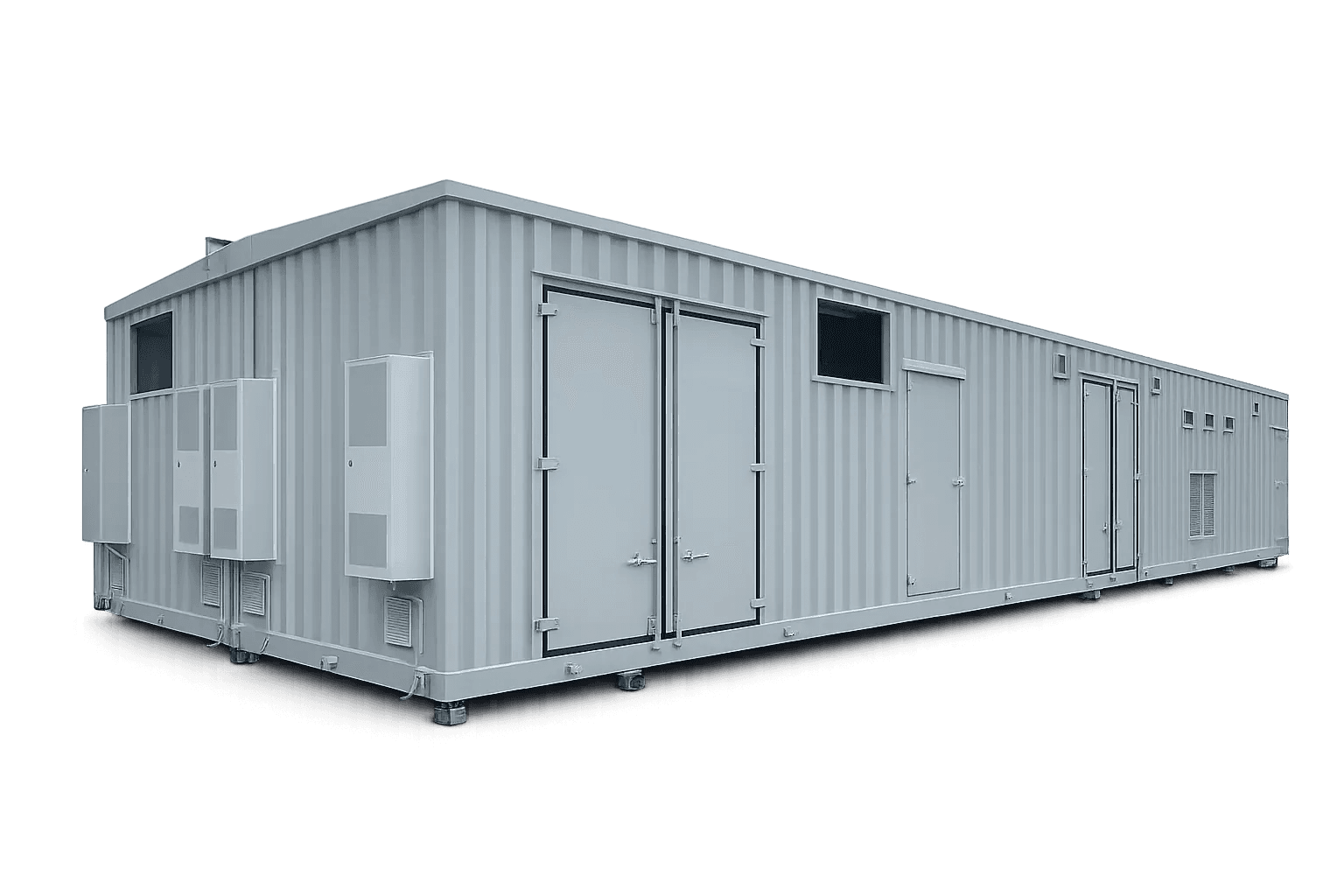
Double-Bay Synchronous Condenser E-House
Synchronous Condenser E-Houses#ETZ-EHOUSE-SC
Product Overview
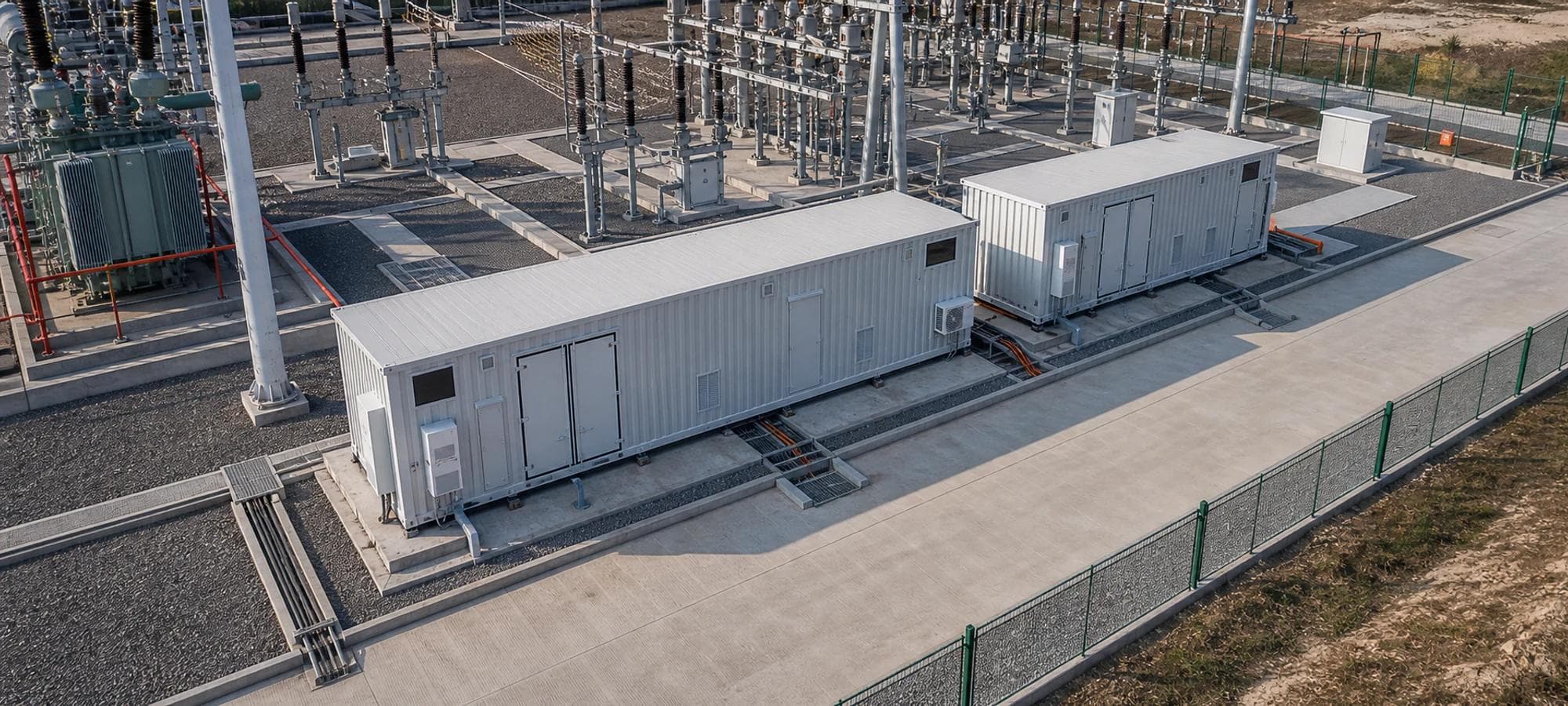
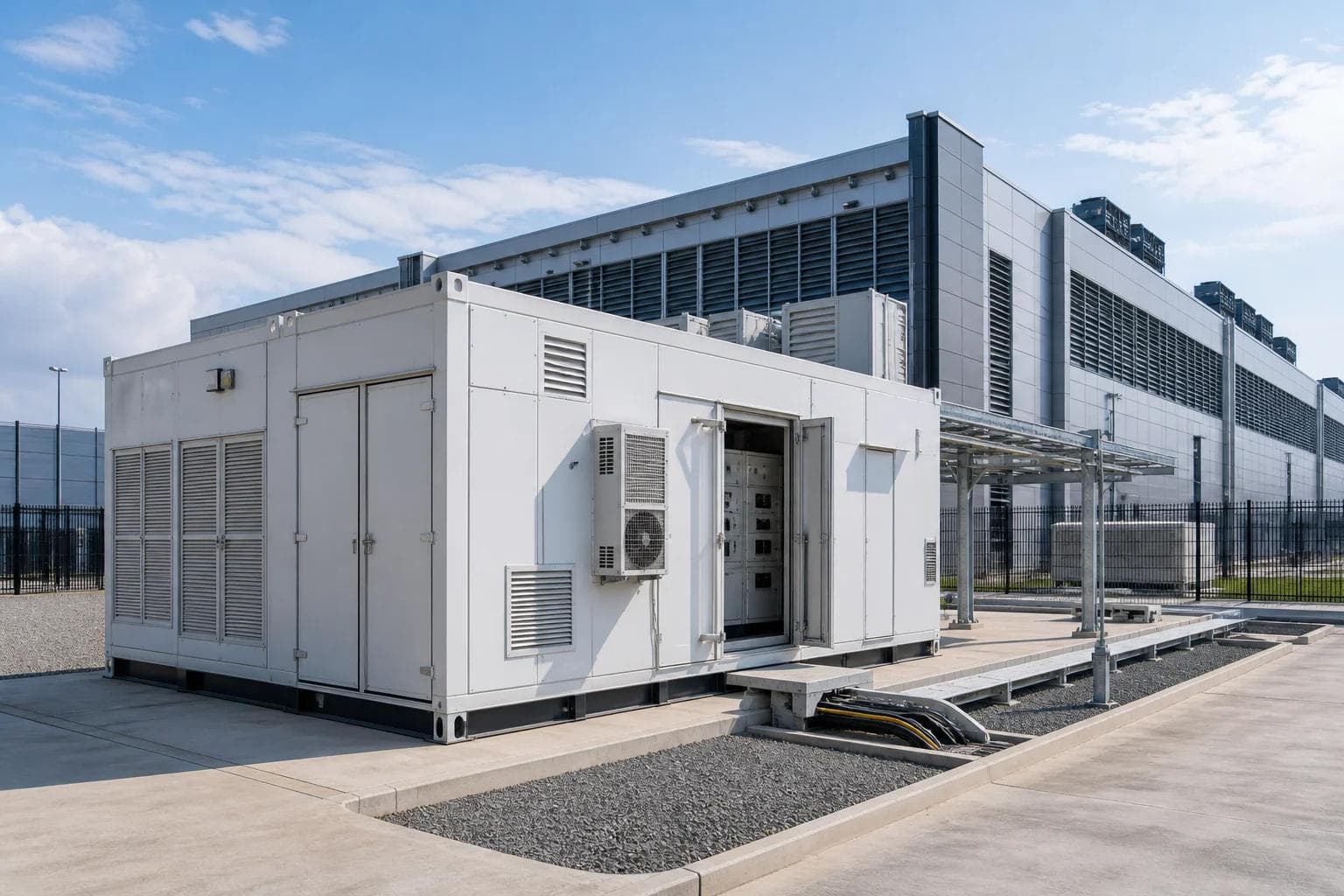
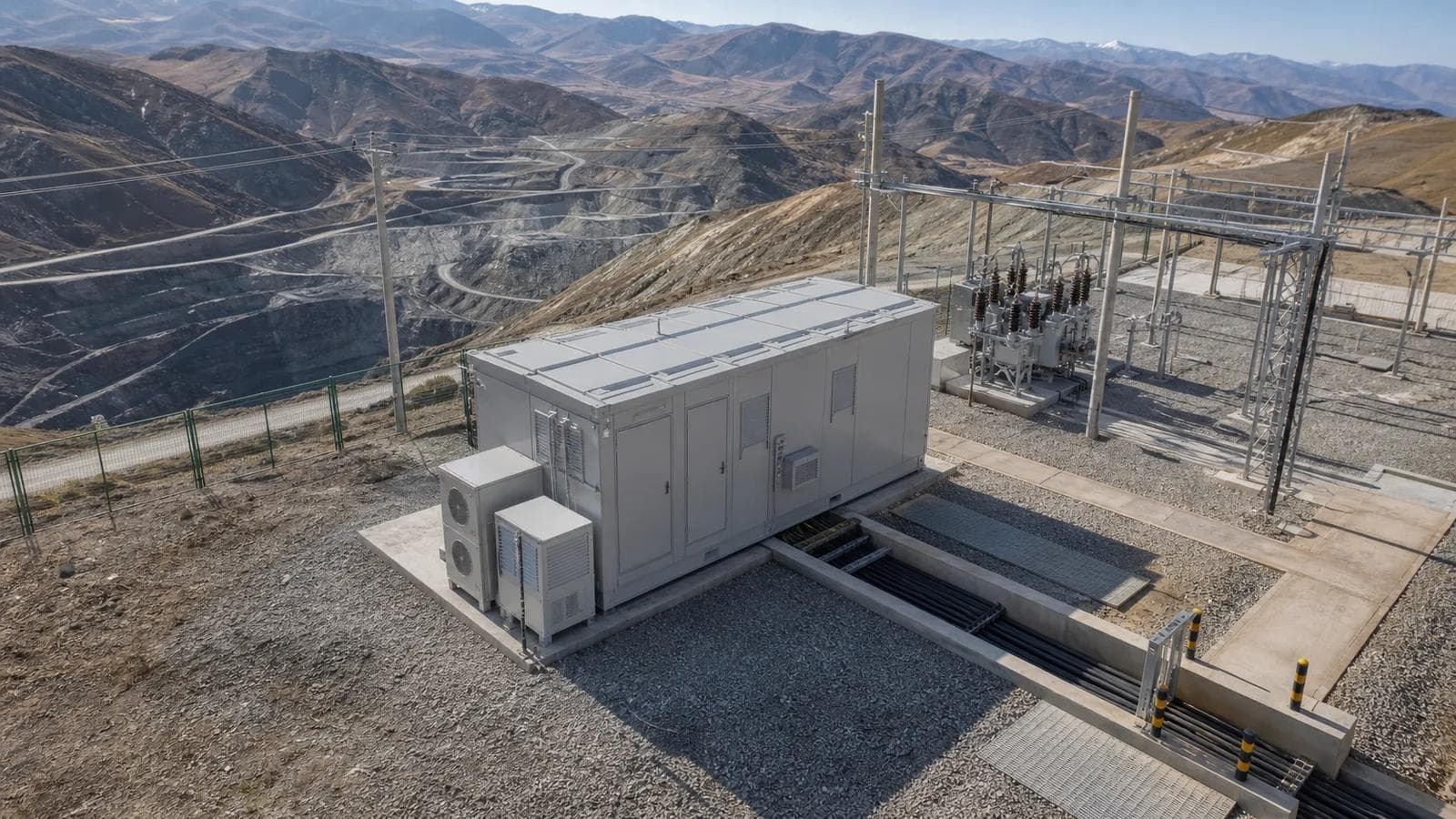
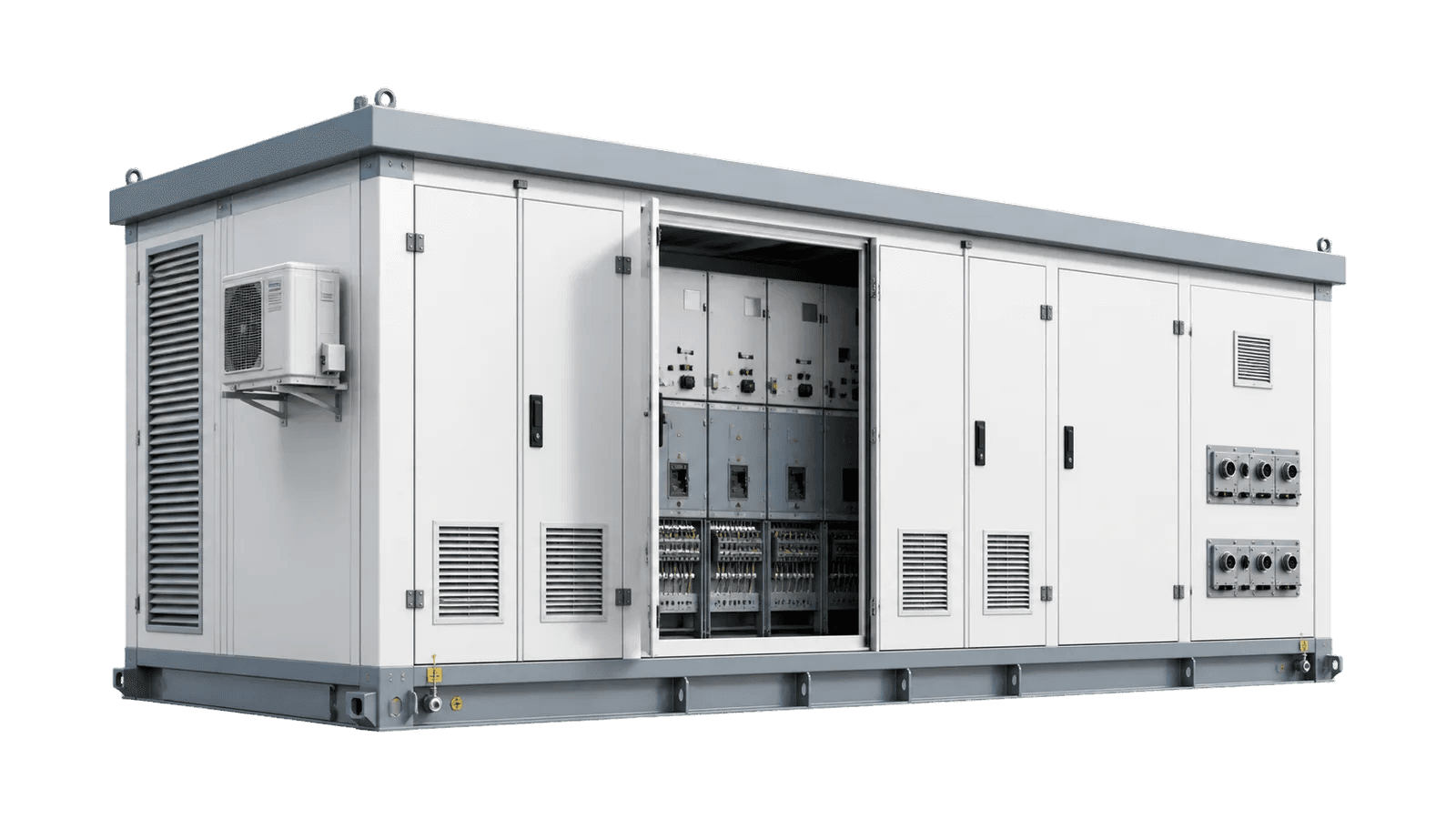
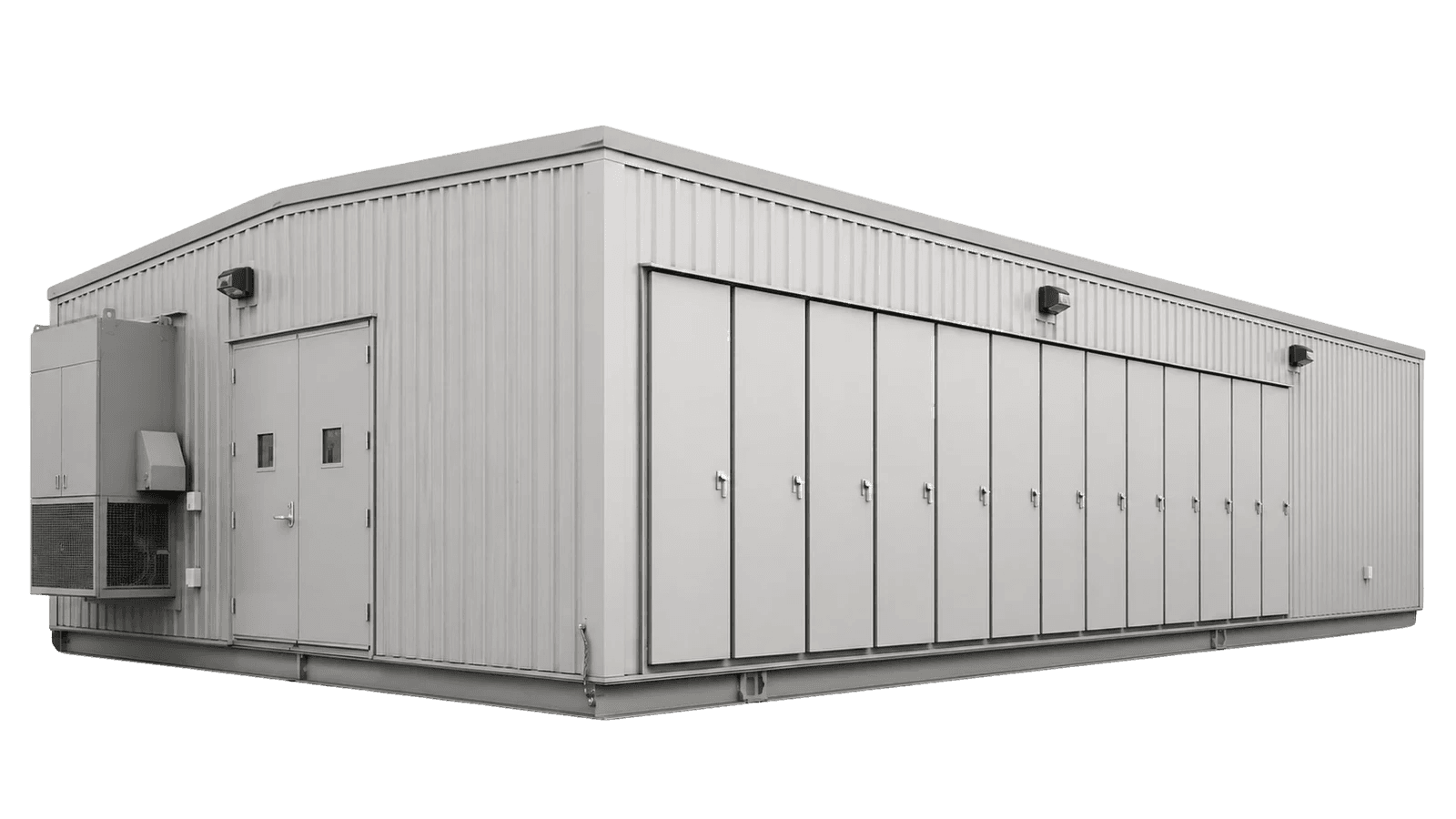
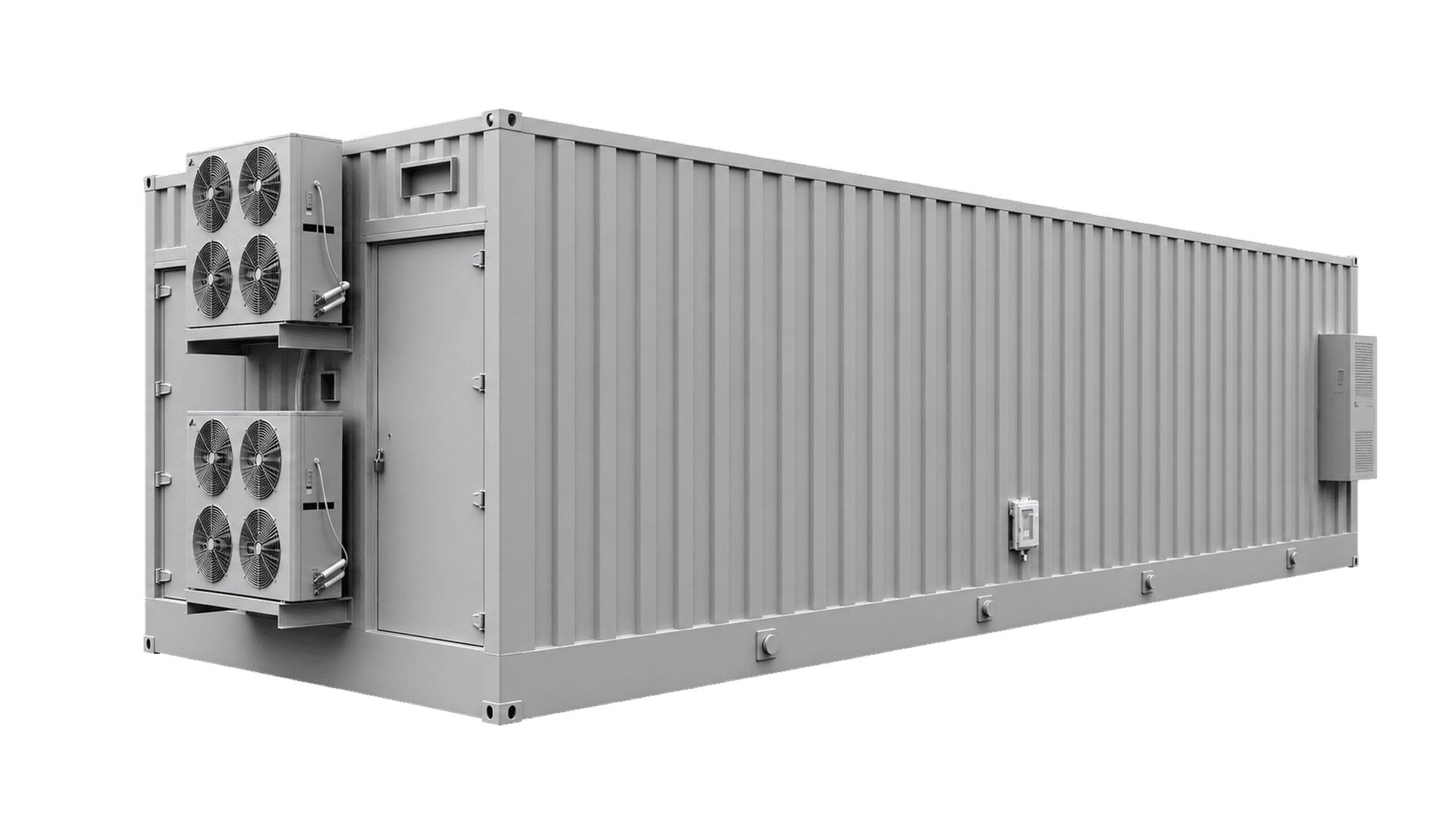
Synchronous condenser projects often need a large electrical enclosure for primary equipment, secondary protection and control, auxiliary power, HVAC, fire safety and monitoring systems. ETENZ builds a double-bay E-House that is manufactured and shipped as two transportable modules, then assembled on site as one integrated electrical space. The approach keeps more work inside the factory while reducing transport constraints, field coordination pressure and interface risk.
Key Metrics
2 modules
Build
Pri. / Sec.
Scope
1 level
Layout
C3-C5
Class
Application Scenarios
Synchronous Condenser Electrical E-HouseFor synchronous condenser projects where primary switchgear, protection and control panels, auxiliary power, HVAC, fire safety and monitoring equipment need to be arranged in a factory-built electrical E-House.Reactive Power Compensation ProjectFor transmission grids, substations and large industrial power systems that deploy synchronous condensers, SVC or similar reactive power equipment and require coordinated electrical enclosure, zoning, cooling and interface planning.Renewable Energy Collector Station SupportFor wind and solar collector stations or step-up substations that add synchronous condensers or other reactive power support equipment to meet grid-connection, voltage support and auxiliary electrical system requirements.
Related Certifications

Classification Society Certification

ISO 14001
ISO 45001

ISO 9001
Double-Bay Synchronous Condenser E-House
Synchronous Condenser E-Houses#ETZ-EHOUSE-SC
Key Metrics
2 modules
Build
Pri. / Sec.
Scope
1 level
Layout
C3-C5
Class
Product Overview
Synchronous condenser projects often need a large electrical enclosure for primary equipment, secondary protection and control, auxiliary power, HVAC, fire safety and monitoring systems. ETENZ builds a double-bay E-House that is manufactured and shipped as two transportable modules, then assembled on site as one integrated electrical space. The approach keeps more work inside the factory while reducing transport constraints, field coordination pressure and interface risk.
Application Scenarios
Synchronous Condenser Electrical E-HouseFor synchronous condenser projects where primary switchgear, protection and control panels, auxiliary power, HVAC, fire safety and monitoring equipment need to be arranged in a factory-built electrical E-House.Reactive Power Compensation ProjectFor transmission grids, substations and large industrial power systems that deploy synchronous condensers, SVC or similar reactive power equipment and require coordinated electrical enclosure, zoning, cooling and interface planning.Renewable Energy Collector Station SupportFor wind and solar collector stations or step-up substations that add synchronous condensers or other reactive power support equipment to meet grid-connection, voltage support and auxiliary electrical system requirements.
Related Certifications
Classification Society Certification
ISO 14001
ISO 45001
ISO 9001
Product Features

Double-bay delivery
Two E-House modules are fabricated and shipped separately, then joined on site for large synchronous condenser electrical rooms with transport or lifting constraints.

Primary and secondary zoning
Cabinet foundations, cable routes, earthing points and maintenance clearances are coordinated around primary equipment and protection-control panels.

Auxiliary systems ready
HVAC, drainage, fire detection, emergency lighting, access control and monitoring interfaces can be pre-arranged or integrated to reduce site trades.
Product Details
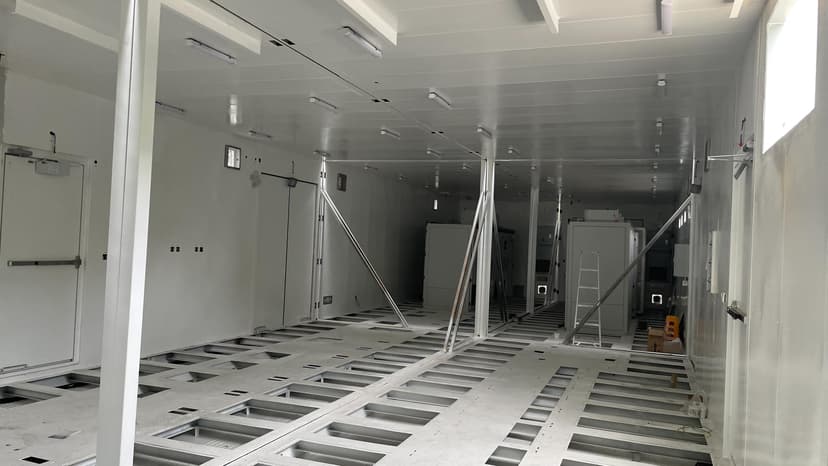
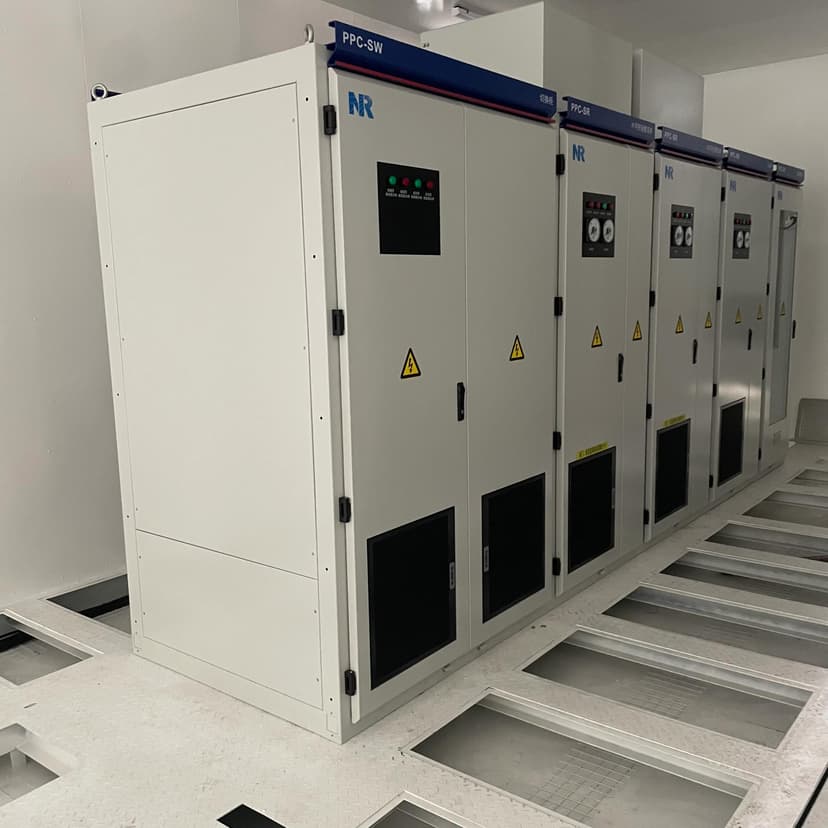
Equipment bases and maintenance aisle after double-bay assembly
For large synchronous condenser projects, the electrical E-House can become difficult to ship and lift as one body. ETENZ splits the enclosure into two factory-built modules with defined structural joints, base connections, weather sealing and cable passage interfaces. After delivery, the modules are assembled into a single equipment space while retaining a high level of factory preassembly.
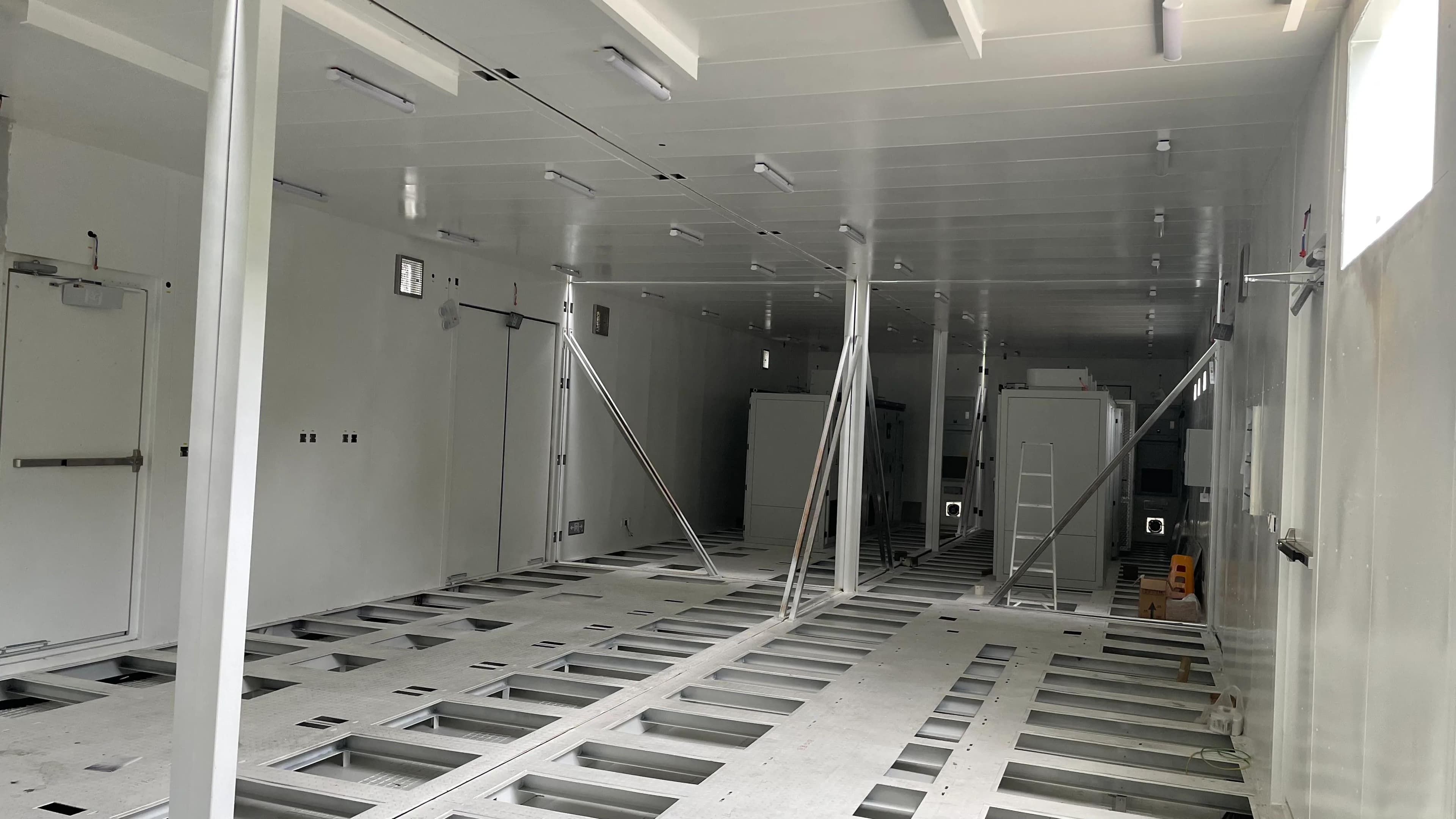
Equipment bases and maintenance aisle after double-bay assembly
Primary equipment areas focus on load-bearing, power circuits, insulated flooring and service clearances. Secondary areas focus on protection, control, communications, anti-static flooring and cable management. During engineering, ETENZ can coordinate cabinet dimensions, door swing, mounting bases, cable trenches or trays, grounding points and auxiliary distribution boundaries before site work begins.
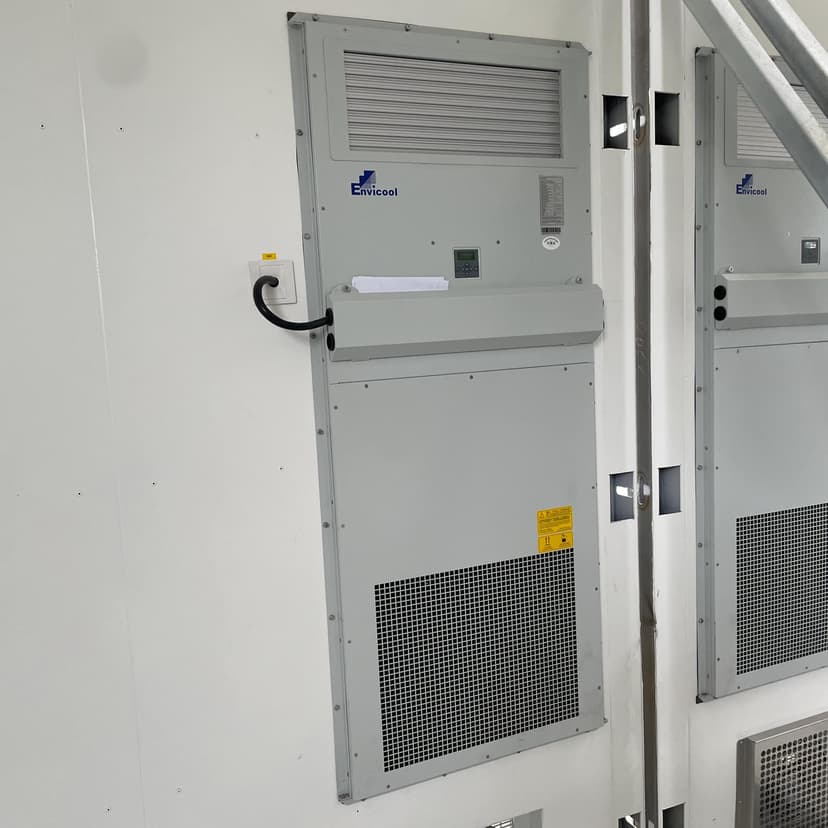
Ambient conditions, dust, corrosion level and condensation risk vary by substation and renewable energy site. The enclosure can be configured with air conditioning, ventilation, filtration, insulation, sealing and drainage. Fire detection, emergency lighting, access control, video security and monitoring interfaces can be reserved or integrated according to the agreed scope.
Delivery Scope Options
Scope 1
Enclosure fabrication and assembly interfaces
Scope 1Enclosure fabrication and assembly interfaces
For projects where the equipment package and system design are already defined. ETENZ supplies the double-bay enclosure, structural interfaces, interior fit-out, equipment bases and site assembly boundaries.
Scope Includes:
Two-module enclosure fabrication
Module joint and weather-sealing details
Doors, louvers and maintenance aisles
Equipment bases and mounting holes
Lighting, grounding and drainage provisions
Scope 2
Equipment layout and interface engineering
Scope 2Equipment layout and interface engineering
For projects that need the internal layout verified before manufacturing. ETENZ coordinates primary cabinets, protection and control panels, auxiliary distribution, cable routes, grounding and service access.
Scope Includes:
Primary and secondary equipment zoning
Cabinet bases and door-swing coordination
Cable trench, tray and entry planning
Grounding, terminal and auxiliary circuit interfaces
Site handover boundary confirmation
Scope 3
Auxiliary subsystem integration
Scope 3Auxiliary subsystem integration
For projects seeking a higher factory completion level. HVAC, drainage, emergency lighting, fire safety, access/video security and monitoring interfaces can be integrated or reserved before shipment.
Scope Includes:
HVAC and drainage coordination
Emergency lighting and auxiliary power
Fire detection and linkage interfaces
Access control, video and monitoring interfaces
Factory inspection and handover documentation
Technical Specifications
Product form
Double-bay synchronous condenser E-House
Customization basis
Project drawings and equipment layout
Applicable sections
Primary / secondary equipment rooms
Structure
Single-level modular enclosure
Assembly method
Two modules fabricated separately and assembled on site
External roof panel
2.0 mm galvanized steel sheet
External wall panel
1.6 / 2.0 mm corrugated or flat panel
Bottom panel
2.0 mm galvanized steel sheet
Main profiles
Channel steel / square tube
Internal wall and ceiling
1.2 mm galvanized steel sheet
Primary-room floor
4.0 mm chequer plate + insulating mat
Secondary-room floor
Anti-static raised floor
Insulation
50 mm rock wool / polyurethane
Drainage
Collected drainage / dispersed drainage
Corrosion environment
C3 / C4 / C5
| Parameter | Specification |
|---|---|
| Product form | Double-bay synchronous condenser E-House |
| Customization basis | Project drawings and equipment layout |
| Applicable sections | Primary / secondary equipment rooms |
| Structure | Single-level modular enclosure |
| Assembly method | Two modules fabricated separately and assembled on site |
| External roof panel | 2.0 mm galvanized steel sheet |
| External wall panel | 1.6 / 2.0 mm corrugated or flat panel |
| Bottom panel | 2.0 mm galvanized steel sheet |
| Main profiles | Channel steel / square tube |
| Internal wall and ceiling | 1.2 mm galvanized steel sheet |
| Primary-room floor | 4.0 mm chequer plate + insulating mat |
| Secondary-room floor | Anti-static raised floor |
| Insulation | 50 mm rock wool / polyurethane |
| Drainage | Collected drainage / dispersed drainage |
| Corrosion environment | C3 / C4 / C5 |
Product FAQs
Yes. Dimensions, panels, openings, mounting bases, cable routes, grounding, drainage and interface provisions can be engineered from customer drawings, equipment data and the project technical agreement.
Electrical enclosures for synchronous condenser projects can be too large for practical one-piece transport or lifting. Two modules allow factory fabrication and separate shipment, then final assembly on site.
Yes. Primary areas normally emphasize load-bearing, power circuits, insulated flooring and clearances. Secondary areas emphasize protection-control panels, communication, anti-static flooring and cable management.
They can be integrated or reserved according to the agreed scope. ETENZ can support air conditioning, emergency lighting, auxiliary distribution, fire interfaces, access control, video and monitoring interfaces.
With the correct corrosion class, installation and maintenance regime, the enclosure can be designed for a service life of 20 years or more. Final requirements should follow the project specification.
Equipment list, cabinet dimensions, primary and secondary layout requirements, cable entry method, site corrosion class, transport and lifting limits, and the expected delivery scope help define the solution quickly.
Related Solutions
Power & Control
Synchronous Condenser Electrical E-House Integration Solution
An integrated primary and secondary electrical E-House solution for synchronous condenser projects, translating drawings, equipment layout, interfaces, HVAC, fire safety, security and site assembly requirements into factory-built delivery units.